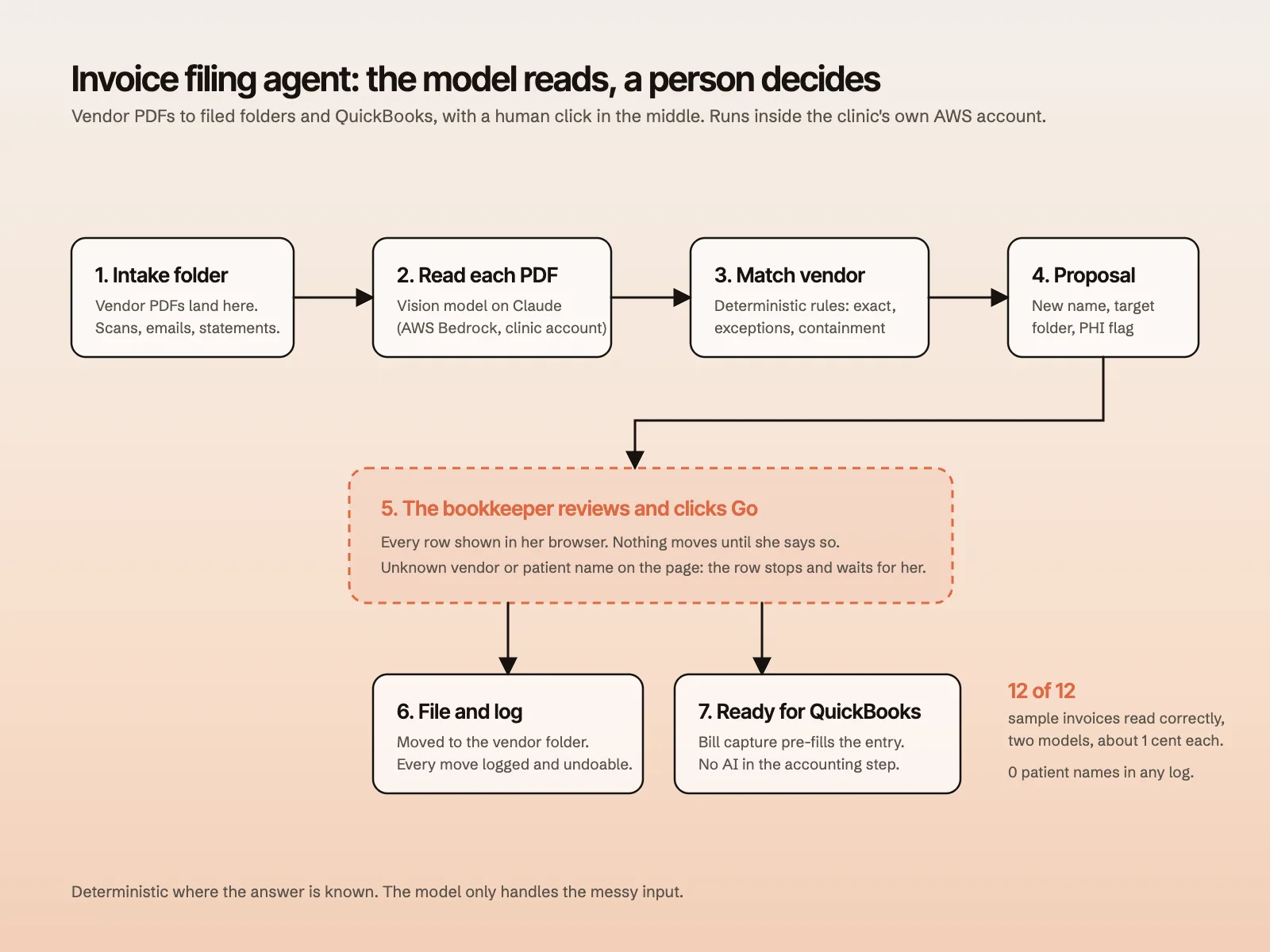
Invoice filing for a clinic's bookkeeper: HIPAA-compliant on Claude via AWS Bedrock, at 0.9 cents an invoice.
The bookkeeper keyed every vendor bill by hand and filed PDFs into 184 folders. Now a vision model reads each one, proposes the folder, and waits for her click, on a HIPAA-compliant path.
0.9¢
per invoice, 3.4 seconds a file, measured on Claude Sonnet 4.6 in the clinic's account
26,904 input and 2,003 output tokens for 12 files at Bedrock on-demand pricing: $0.11 a run.
12 of 12
synthetic invoices read correctly on 2 models, rotated scans included
The build
- The accounting entry without AI. Approved PDFs flow into QuickBooks bill capture, which fills the bill from the vendor's default category. No model touches the ledger.
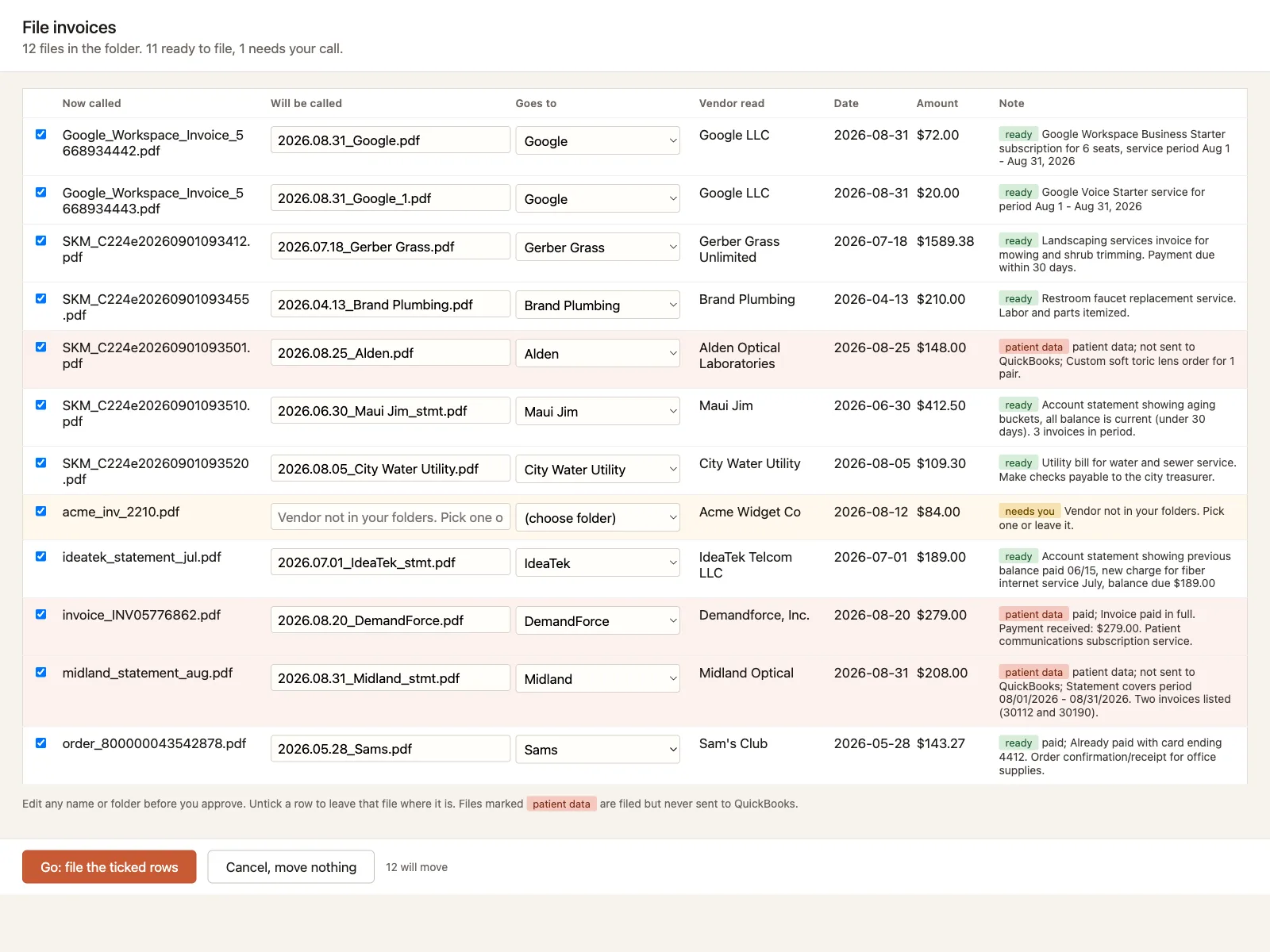
- A vision-model filer for the messy input: a program on her PC reads each PDF (rotated scans included), matches it to the vendor folder, proposes the new file name, and shows a review table. Nothing moves until she clicks Go.
- Every move logged and undoable. Unknown vendors are flagged for her instead of guessed. Patient-named documents are filed but never queued for QuickBooks, and their names never enter the log.
- The model call runs on Claude through AWS Bedrock inside the clinic's own AWS account, under the standard AWS BAA, with data retention set to none.