Putback, an insurance checker for a dental front desk: coverage checked two days before every visit, and every unpaid claim given a status and a next step.
Insurance problems used to surface at the visit or months later on the aging report. Putback puts them in front of the desk two days ahead, and every claim that hasn't paid comes with a status and the next step, in plain words.
2 daysaheadevery patient on the schedule sent to the insurer before the visit, with the ones who need something, or need a call, listed firstBefore the visits runs over the practice's schedule export about two days ahead of the appointments.
16situationsfrom what the practice's front desk told us, each answered with the exact words to ask the patient
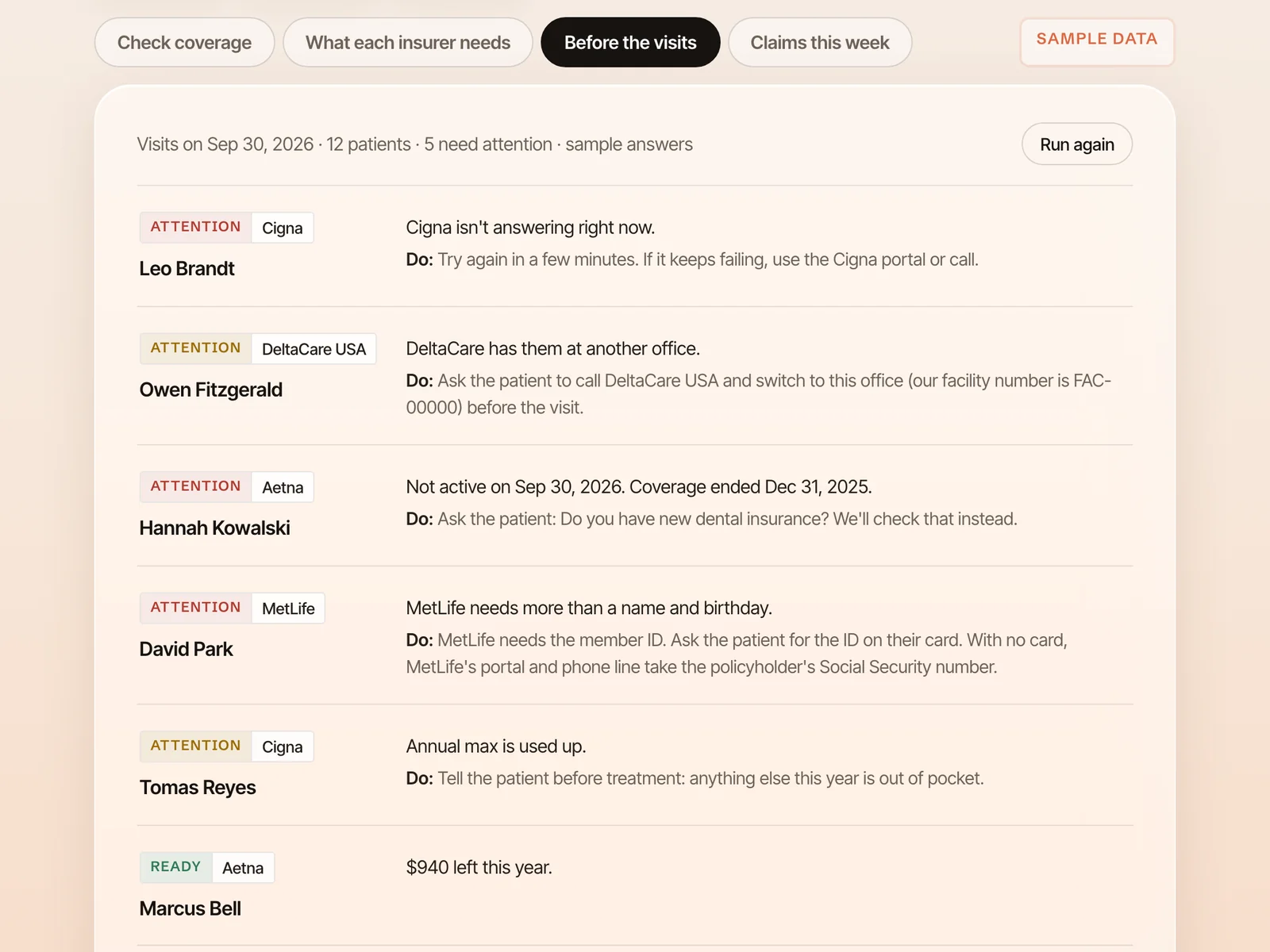
The schedule, checked two days ahead, with the patients who need something first. Sample patients.
What was broken
Before
A one-dentist PPO practice checked insurance by hand, insurer portal by insurer portal, and worked unpaid claims from an aging report that says how old a claim is but never why it hasn't paid. Every insurer wants different details, some won't find a patient by name and birthday at all, and a claim left too long can miss the insurer's timely filing limit.
What I built
The build
Before the visits. The schedule goes in about two days ahead, and every patient comes back Ready or Attention, with the problem first: coverage ended, the year's maximum used up, the plan assigned to another office. Each one says what to do.
Check coverage. One card with what the claim needs: active dates, what's left of the annual maximum, the deductible, member ID and group number, and coverage by category, with frequency limits where the insurer sends them.
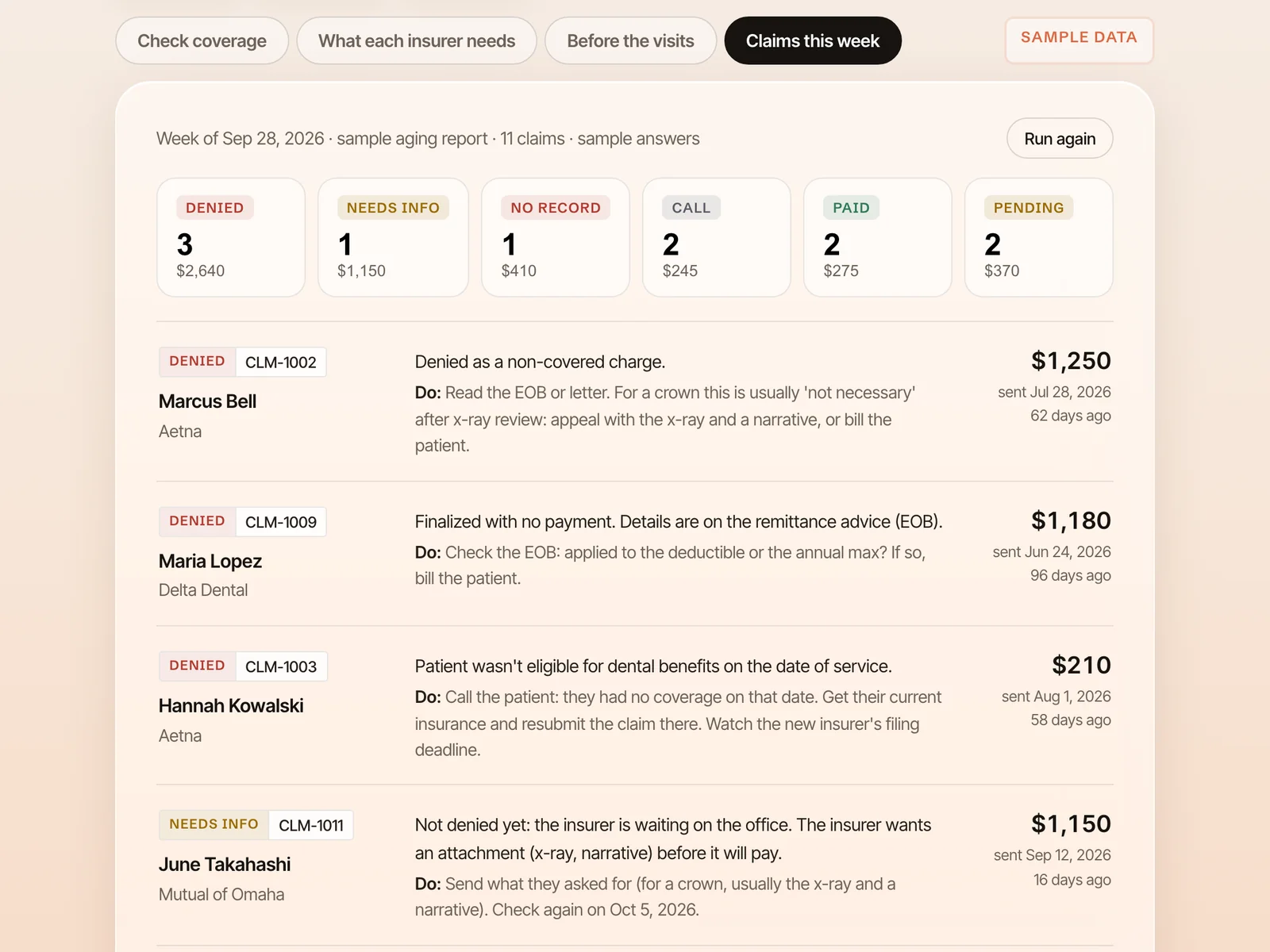
Claims this week. Every claim on the aging report gets one status: denied, needs info, no record, call, paid or pending. Where the insurer sends a reason, it's in plain words, and every status comes with the next step, like the attachment the insurer is waiting on or a payment that still needs posting.
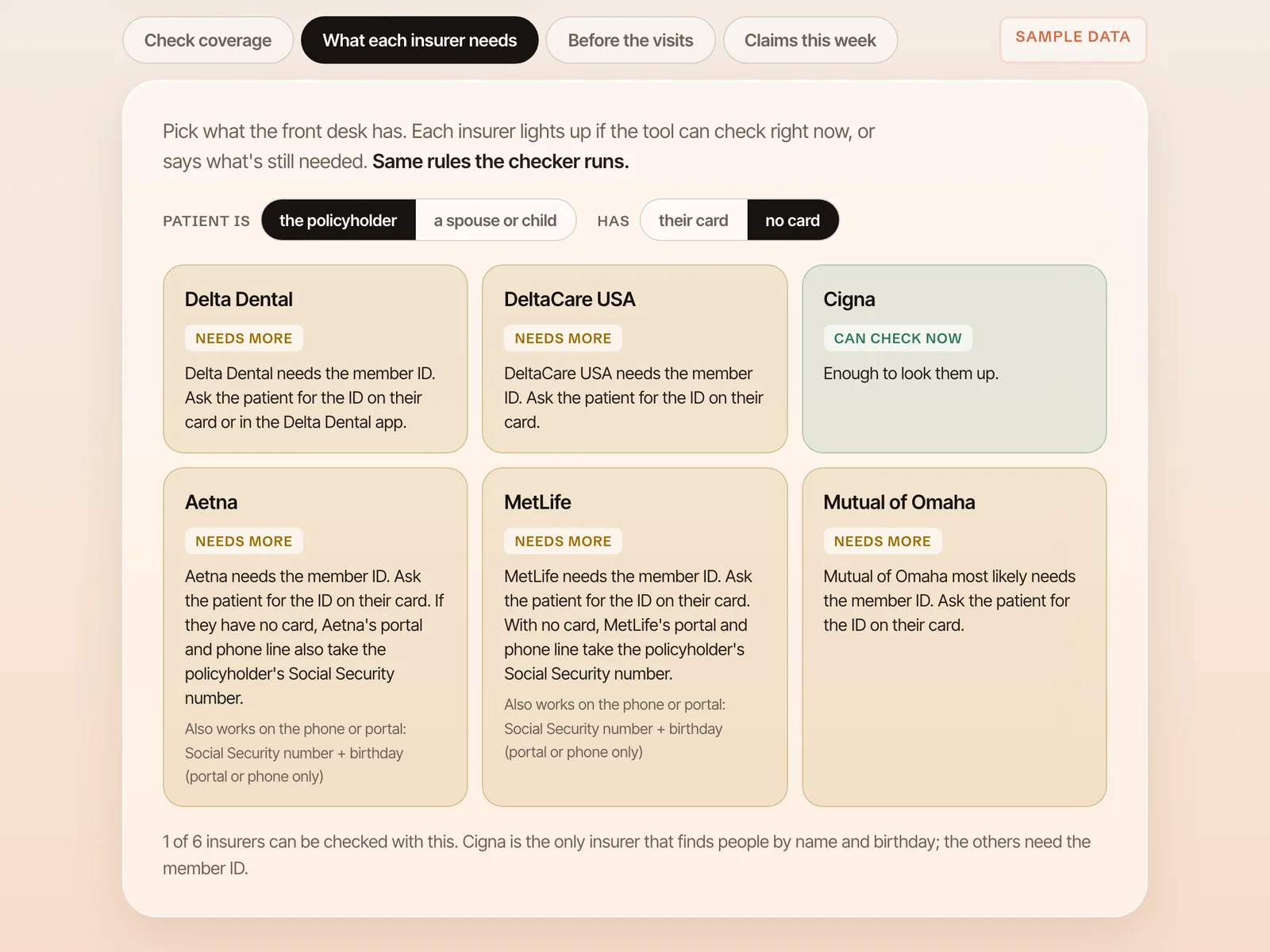
What each insurer needs. A grid built from the same rules the checks run, so the desk knows which insurers can find a patient by name and birthday and what to ask for the rest.
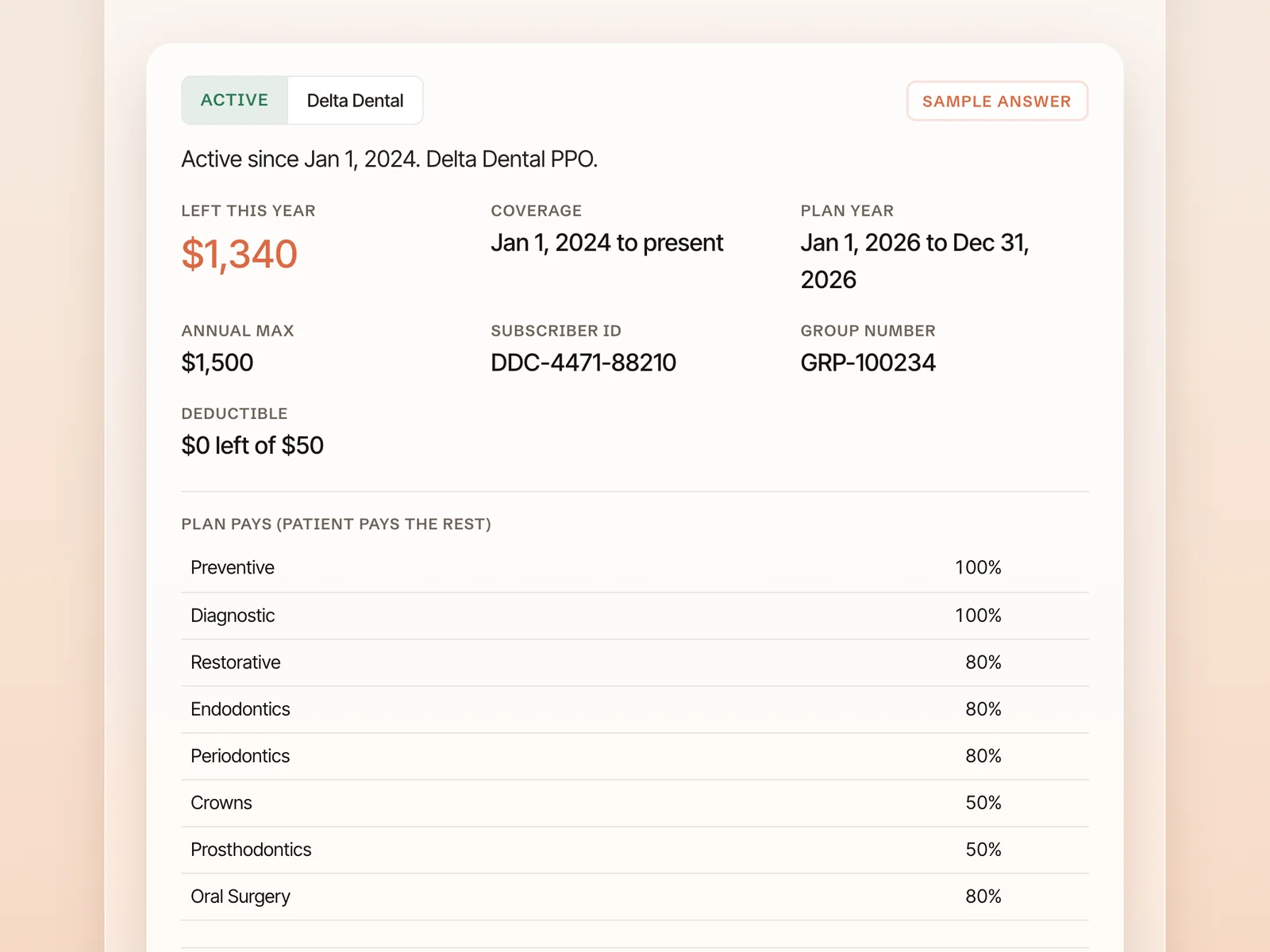
One card with everything the claim needs.Every claim on the aging report gets a status and a next step.What each insurer needs, so the desk asks once.
What changed
Before and after
Before
By hand
Checking coveragePortal by portal, by hand
A patient with a problemFound at the visit
An unpaid claimA line on the aging report
What each insurer needsLearned call by call
After
The system
Checking coverageThe whole schedule, two days ahead
A patient with a problemListed first, with what to ask
An unpaid claimA status and a next step
What each insurer needsOne grid, from the same rules
Where the numbers come from. Checks go through a healthcare clearinghouse at about 30 cents each at its published rate. Every screen on this page uses sample patients.
For engineers
How it's built
Architecture
A Python service with a one-page web front end. Coverage checks are X12 270/271 eligibility requests through Stedi; claim status is 276/277. Deterministic code reads every insurer's answer: plan-year against coverage dates, ranked maximum and deductible rows, split categories (a crown at 60% beside a repair at 90%), DeltaCare facility matching. The schedule and the aging report come in as the exports the desk already makes, so nothing has to connect into the practice software.
Where it runs
On the practice's own computer, answering only on that machine unless a password is set, with the clearinghouse as the one outside connection.
Tests and evals
210 automated tests across 14 files, plus 12 recorded insurer answers from the clearinghouse's test mode. Three QA passes and a review against 15 test requests to sample insurers.
Cost and latency
About 30 cents a check at the clearinghouse's published rate for the first 250 a month.
Guardrails
It never guesses. A check that is missing a detail says what to ask the patient instead of sending a guess, and an incomplete search never tells the desk to resubmit. An insurer that does not answer claim status electronically, like MetLife, is marked Call rather than given an answer it never sent.
The tradeoff we chose
Why this way and not the other
No direct connection into Dentrix yet. The schedule export and aging report the desk already makes are enough to run on, and an approved integration costs thousands up front. A direct connection comes once enough practices on the same software are using it.